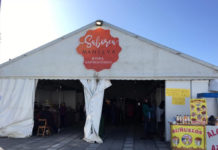
Manilva Town Hall has launched a competition for young people aged between 14 and 30 to promote the youth party «Midsummer 2025», which will be held on 21 June. Through TikTok or Reel-style videos, participants can compete for cash prizes of €300, €200 and €100 respectively. A total of €600 in prizes coming directly from public funds, specifically from the «Youth Prizes» budget item.
Although the aim of encouraging youth participation may seem commendable, several questions arise around this competition. To begin with, this is a party that carries no significant weight in the municipality’s cultural calendar, and no successful precedents are known from the past. Does this kind of promotion really merit public investment, even more so in the form of videos lasting less than a minute and a half?
As if that were not enough, the competition rules, officially published on 23 May, do not clearly define what exactly the content of the video should consist of. It is stated that «the theme is to promote our ‘Midsummer’ party», about which no further information is given, and that the video may not exceed a minute and a half in length, but it is left to the organisers’ discretion to decide which videos meet «minimum technical quality criteria», with no further specification. As stated at the end of the rules, «The organisation reserves the right to add new rules, to change the programme or any entry wholly or partially, as well as to adopt new initiatives which, although not regulated in these rules, contribute to the greater success and smooth running of the competition.» This could open the door to a subjective or arbitrary selection of the winners.
Another controversial point is the use and distribution of the winning videos. Although this is a campaign to promote a public party, the videos will only be handed over for distribution to media managed by the Town Hall itself, such as RTV Manilva or its Press Office. They may not be passed on to other media or freely shared without the express authorisation of the author, thus limiting their reach and, therefore, the effectiveness of the public spending incurred for the stated purpose: the promotion of the event.
In a context where municipal resources must be used responsibly, this initiative raises questions about the suitability of allocating public money to an action which, according to what has been published so far, seems to owe more to improvisation than to a real communication strategy. Promoting a minor party with TikTok videos might be endearing, but when public money is involved, the criteria of usefulness and transparency should be far more demanding.
For anyone interested, you have until 16 June to submit your entries, and you can see the full rules by clicking here.
Leer esta noticia en español →